

When a major storm passes through, most business owners do a quick visual scan of their property—looking for obvious damage like fallen tree limbs, broken windows, or missing signage. But what about the roof?
For commercial flat roofing systems, the signs of wind damage aren’t always as visible as you'd expect. In fact, some of the most severe and costly roof issues start out hidden beneath the surface, silently compromising your building’s protection until it's too late.
At Etheridge Roofing, we specialize in commercial flat roofing systems and know firsthand what the eye can miss. Let’s break down how wind affects flat roofs, what kind of damage is often overlooked, and why post-storm inspections are your best defense.
Wind Damage Isn’t Just About Shingles or Blown-Off Panels
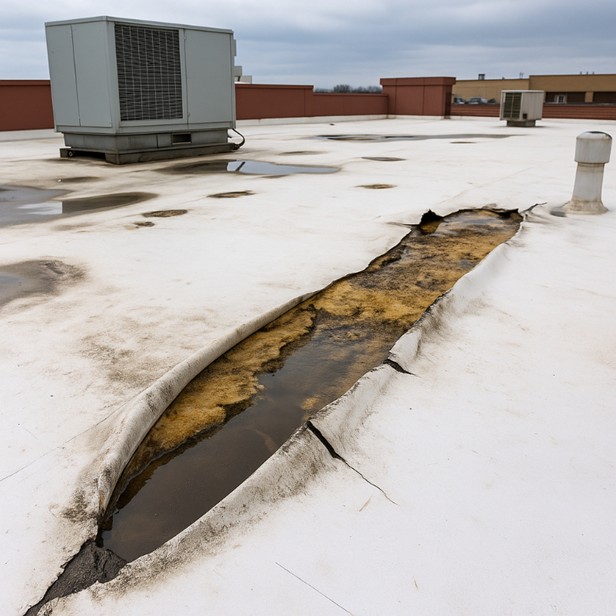
Unlike sloped residential roofs where shingles are visibly peeled back, commercial flat roofs present a different set of challenges.
Wind doesn’t need to rip off part of the roof to cause trouble. Instead, it often causes uplift, which affects the roof’s attachment to the deck. That means your roof could look completely fine—even as internal layers separate and lose adhesion due to suction forces.
What Is Wind Uplift—and Why Does It Matter?
Wind uplift occurs when strong wind flows across the surface of the roof, creating negative pressure (like suction). This pressure can:
- Loosen fasteners
- Pull membrane seams apart
- Compromise flashing at roof edges or penetrations
- Warp insulation boards or detach them from adhesive
While the top layer may appear intact, the bond between the roof system and the substrate may be weakened, especially at perimeters and corners.
What the Eye Can’t See: Hidden Damage Risks
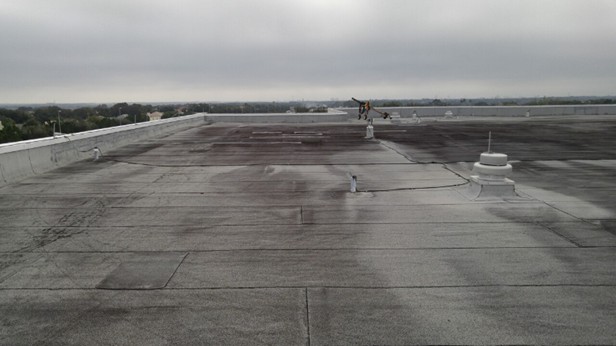
Some of the most dangerous damage from wind is completely invisible from ground level or even during a casual rooftop walk.
Here’s what might be lurking beneath a wind-exposed flat roof:
- Open or partially failed seams in TPO/PVC membranes
- Lifted edge metal or flashing with loosened anchors
- Detachment between layers, including membrane, insulation, or vapor barriers
- Tiny punctures caused by flying debris
- Wrinkling or air pockets, often early signs of adhesion failure
These issues often lead to slow-developing leaks or internal moisture problems—months after the storm passed.
Wind Damage and Warranty Compliance
Here’s something many building managers overlook:
Roof manufacturer warranties often require a post-storm inspection following high-wind events—especially for wind-rated systems.
If you suspect wind speeds have exceeded your roof system’s rated threshold (often 60–90+ mph), your warranty coverage could be impacted unless you document and address issues quickly.
Why Post-Storm Inspections Are Critical
A formal inspection by a commercial roofing professional like Etheridge Roofing provides a detailed assessment of your roof’s condition, including:
- Photographic documentation of all membrane seams, penetrations, and perimeters
- Infrared or moisture scans to detect trapped water below the surface
- Assessment of any shifting, tenting, or bubbling
- Recommendations for immediate repairs or ongoing monitoring
We catch what others miss—and help you plan your next steps before minor issues escalate into major costs.
What Happens If Wind Damage Is Ignored?

If left uninspected, hidden wind damage can lead to:
- Water infiltration through opened seams or lifted flashing
- Insulation saturation, reducing energy efficiency and increasing HVAC costs
- Mold and interior damage, which could disrupt tenant operations
- Structural deck deterioration from prolonged moisture exposure
- Warranty voidance for failure to perform required maintenance
What may have been a simple patch or seam repair could turn into a $50,000+ restoration project if caught too late.
Signs That May Indicate Hidden Wind Damage
Even if the roof “looks fine,” here are some warning signs to watch for after a storm:
- Sudden rise in HVAC usage (possible insulation issues)
- New odors or mold complaints inside the building
- Popping or banging noises from above during wind
- Visual tenting, bubbling, or ponding water patterns
- Loose or detached coping metal or edge flashing
How Etheridge Roofing Can Help
Etheridge Roofing has decades of experience in commercial flat roofing, including:
- TPO & PVC membrane systems
- EPDM
- Metal retrofit roofing
- ES-1 certified in-house metal fabrication for edge details
Based in Wilson, NC, we serve property managers, facility directors, and business owners across the region with prompt, professional service you can trust.
Let’s Inspect Before the Next Storm Hits
Wind damage doesn’t always shout—it whispers. But those whispers, left unheard, can echo into expensive consequences.
Let Etheridge Roofing help you stay one step ahead. Schedule your post-storm inspection today and gain peace of mind knowing your roof is secure, sealed, and storm-ready.
Resources
- Wind Damage and Roofing Systems
- FEMA: Protecting Roofs from Wind Damage
- Carlisle SynTec: Wind Uplift Guidelines
Popular Posts

Selecting the appropriate roofing system is...


The connection between the quality of our...
Recent Posts

When faced with Emergency Commercial Roof...

As hurricane season approaches, property managers...