

When your commercial flat roof reaches a certain age or begins showing signs of distress, one of the biggest decisions you’ll face is this: Should I recover the roof or replace it? It's not just a cost question — it’s a strategic one that affects long‑term performance, asset value, tenant satisfaction, and lifecycle cost.
In 2026, with evolving building codes, material advancements, and heightened expectations for energy efficiency and durability, the choice between recovery and replacement deserves careful consideration. At Etheridge Roofing, we help property managers and business owners make informed, financially sound roofing decisions.
What Is Roof Recovery vs. Roof Replacement?
Roof Recovery (Overlay)
A recovery involves installing a new roofing membrane over the existing roof without removing the old one. In the commercial world, this is most often done with single‑ply systems like TPO or PVC.
When it’s most appropriate:
- The existing roof is structurally sound
- No widespread moisture issues
- The deck is in good condition
- Drains and penetrations are performing well
Benefits:
- Lower upfront cost than a full replacement
- Faster turnaround with less disruption
- Less waste sent to landfill
Limits:
- Underlying issues may remain hidden
- Not always feasible if the existing system is badly deteriorated
Roof Replacement (Full Tear‑Off)
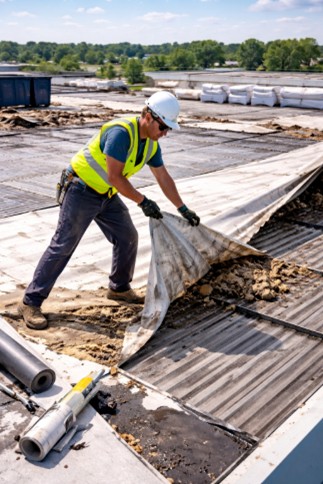
A replacement means removing the existing roofing system down to the deck and installing a completely new roofing assembly — membrane, insulation, edge details, and everything in between.
Best for roofs that:
- Have active leaks or moisture infiltration
- Show signs of widespread insulation failure
- Have reached or passed their expected lifespan
- Present code compliance or insurance concerns
Benefits:
- Addresses all layers of the roof (no hidden problems left behind)
- Often yields better long‑term performance
- Opens the door for insulation upgrades and energy performance improvements
Considerations:
- Higher upfront cost
- Longer installation schedule
- Requires staging and planning to minimize disruption
Key Factors to Consider in 2026
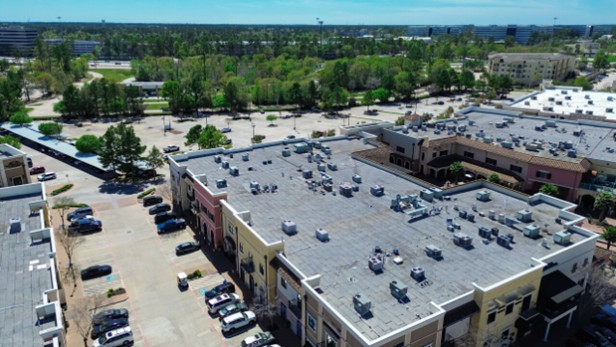
Here are the core criteria we use at Etheridge Roofing when helping clients decide between recovery and replacement:
1. Age of the Roof Most single‑ply systems last 20–30 years depending on materials, UV exposure, and maintenance history. If your roof is older than its expected life, replacement is often the more cost‑effective long‑term option.
2. Moisture & Insulation Condition If moisture is found beneath the membrane or in the insulation, a recovery can trap that water and accelerate deterioration. Moisture scans and core samples help determine the real condition of the roof deck — a crucial factor in the decision.
3. Cost vs. Lifecycle Value A recovery might be 30–50% less expensive upfront, but if it only buys a few years of useful life, it may cost more per year than a longer‑lasting replacement. Evaluating cost per year of expected service life helps clarify the true value.
4. Code & Warranty Considerations Modern building codes and manufacturer guidelines can impact what options are available. Some warranties may require full replacement in order to qualify for extended coverage, especially if the recovery would mask underlying issues.
5. Energy Efficiency Goals If you’re looking to improve energy performance — for sustainability goals or utility cost savings — a full replacement allows for strategic insulation upgrades, reflective membrane systems, and compliance with the latest energy codes.
When a Recovery Makes Sense
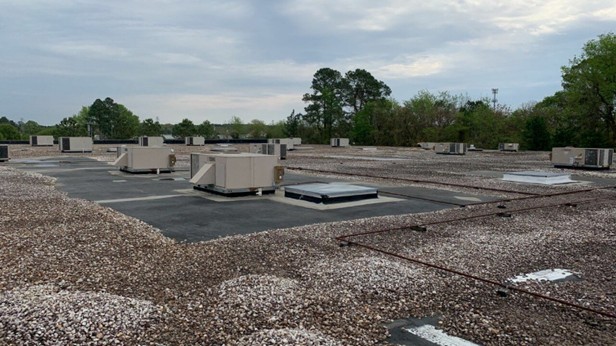
Choose recovery if all of the following are true:
- Structural deck and insulation are dry and stable
- There are no active leaks or moisture issues
- The existing membrane is still in decent condition
- You need to preserve budget without sacrificing performance
- The building owner wants a shorter timeline with less disruption
Typical scenarios:
- A 10–15 year old TPO roof with minimal membrane wear
- Buildings with solid maintenance history and few penetrations
- When immediate cash flow concerns take priority
When a Full Replacement Is the Right Investment
Choose replacement when:
- There’s evidence of hidden moisture under the membrane
- The roof membrane is severely weathered, split, or failing
- You’re approaching or past the expected lifecycle
- Tenant expectations or property valuation demand long‑term security
- You want to upgrade insulation for energy performance
Typical scenarios:
- Roofs older than 20 years with frequent repairs
- Buildings with ongoing leaks, ponding water, or internal staining
- Properties seeking maximum resale value or long‑term lease stability
Why Etheridge Roofing Is a Trusted Partner in This Decision
Choosing recovery or replacement isn’t just about a number — it’s about risk, longevity, and total cost of ownership. Etheridge Roofing has decades of experience helping owners make the right call.
Your Next Step: Schedule a Roof Assessment
Call us today at 888.707.6634
Visit https://www.etheridgeroofing.com/ for more information
Sources & Authority
- National Roofing Contractors Association (NRCA) best practices
- ENERGY STAR roofing standards
- Manufacturer technical papers from Carlisle, Firestone, and Johns Manville
Popular Posts

Selecting the appropriate roofing system is...


The connection between the quality of our...
Recent Posts

When faced with Emergency Commercial Roof...

As hurricane season approaches, property managers...