

In commercial real estate, buyers and investors look beyond square footage and curb appeal.
They evaluate risk.
And one of the biggest indicators of future risk on any commercial property is the condition of the roof.
An aging or poorly maintained roofing system can influence:
- property valuation,
- financing terms,
- insurance costs,
- buyer confidence,
- and even whether a transaction moves forward at all.
On the other hand, a well-documented, professionally maintained commercial roof can become a valuable asset during a sale or acquisition.
At Etheridge Roofing, we regularly work with property owners preparing for:
- property sales,
- refinancing,
- inspections,
- and long-term capital planning.
Here’s how commercial roof condition affects property valuation—and why proactive documentation matters more than ever in 2026.
Why Commercial Roofs Matter in Property Valuation

A commercial roof is one of the largest and most expensive building systems on a property.
For buyers, lenders, and appraisers, the roof represents:
- future capital expenditure risk,
- operational reliability,
- and ongoing maintenance responsibility.
When evaluating a property, one of the first questions often asked is:
“How much life does the roof have left?”
That answer can significantly influence how a property is priced and negotiated.
How Appraisers Evaluate Commercial Roof Condition
Commercial appraisers do not simply look at whether a roof is leaking.
They evaluate:
- estimated remaining service life,
- visible signs of deterioration,
- maintenance history,
- and the likelihood of future replacement costs.
A roof nearing the end of its service life may reduce a property’s perceived value because buyers anticipate:
- immediate repairs,
- future replacement costs,
- operational disruption,
- or increased financial risk.
Even if the roof is not actively failing, visible aging without documentation can raise concerns during valuation.
Buyers See Roofs as Either an Asset or a Liability

In commercial transactions, roofs often become negotiation points.
A professionally maintained roof with:
- documented inspections,
- repair records,
- and remaining warranty coverage
is viewed very differently than a roof with:
- unknown history,
- visible deterioration,
- or deferred maintenance.
To a buyer, uncertainty equals risk.
And risk often affects:
- purchase price,
- financing negotiations,
- escrow requests,
- and due diligence timelines.
Signs of Roof Aging That Concern Buyers and Appraisers
Even before a formal inspection, experienced buyers and appraisers may notice warning signs such as:
- ponding water,
- deteriorating seams,
- aging flashing,
- membrane shrinkage,
- rusted edge metal,
- or visible repairs and patches.
Interior signs can also raise concerns:
- ceiling stains,
- mold odors,
- humidity issues,
- or evidence of previous leaks.
These indicators suggest the roof may require significant investment in the near future.
Roof Replacement Costs Influence Negotiations

One reason roof condition matters so much is simple:
Commercial roof replacement is a major capital expense.
If a buyer believes a roof replacement may be needed within a few years, they may:
- negotiate a lower purchase price,
- request repair credits,
- delay the transaction,
- or require additional inspections.
In some cases, lenders or insurers may also request roofing evaluations before approving financing or coverage.
Documentation Can Protect Property Value
One of the most effective ways to preserve value is through documentation.
A roof with clear service records is often viewed more favorably than a roof with no documented history—even if both roofs are the same age.
Important records include:
- inspection reports,
- maintenance logs,
- repair documentation,
- warranty information,
- moisture scan reports,
- and contractor recommendations.
This documentation demonstrates:
- proactive ownership,
- consistent maintenance,
- and reduced uncertainty.
Why Preventive Maintenance Matters Financially
Preventive maintenance does more than extend roof life.
It helps:
- preserve asset value,
- reduce surprise expenses,
- support buyer confidence,
- and improve long-term budgeting.
Routine inspections can identify:
- drainage issues,
- seam deterioration,
- flashing problems,
- or moisture intrusion
before they escalate into larger failures.
A roof that has been consistently maintained is often easier to evaluate—and easier to trust.
The Role of Roof Warranties in Property Transactions
A transferable manufacturer warranty can also add value during a sale.
Buyers often view warranty coverage as:
- reduced financial risk,
- added protection,
- and evidence of professional installation.
However, warranties are only valuable if:
- they remain active,
- required maintenance has been documented,
- and repairs were completed correctly.
Improper repairs or missing records can reduce the usefulness of warranty coverage during due diligence.
Why Deferred Maintenance Hurts More Than Many Owners Expect
Many commercial roofing problems begin as small, manageable issues.
But deferred maintenance can lead to:
- saturated insulation,
- structural deterioration,
- energy inefficiency,
- mold concerns,
- and interior damage.
The longer problems remain unresolved, the more difficult—and expensive—they become to explain during property evaluations.
A buyer may not just see a repair issue.
They may see evidence of broader property neglect.
How Etheridge Roofing Helps Protect Asset Value
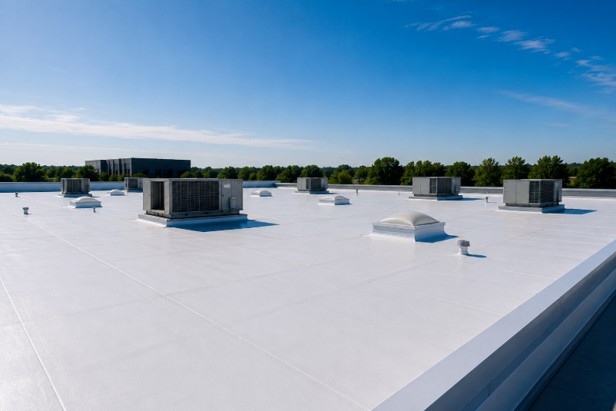
At Etheridge Roofing, we help commercial property owners approach roofing strategically—not reactively.
Our services support long-term property value through:
- comprehensive inspections,
- detailed reporting,
- preventive maintenance,
- moisture detection,
- and code-compliant repairs.
We help clients maintain:
- documentation,
- warranty compliance,
- and clear visibility into roof condition over time.
Because when a property enters the market, the condition of the roof should support the value of the asset—not create questions around it.
Final Thought: Your Roof Tells Buyers a Story
In commercial real estate, buyers pay attention to details that signal future risk.
And few building systems communicate more about a property’s condition than the roof.
A well-maintained commercial roof tells buyers:
- the building has been cared for,
- future costs are manageable,
- and ownership has planned responsibly.
An aging roof without documentation often tells a different story.
Schedule a Commercial Roof Evaluation
Whether you’re preparing for a sale, refinancing, acquisition, or long-term planning, Etheridge Roofing can help you understand the current condition of your roof—and how it may impact your property’s value.
Contact our team today
Popular Posts

Selecting the appropriate roofing system is...


The connection between the quality of our...
Recent Posts

When faced with Emergency Commercial Roof...

As hurricane season approaches, property managers...