

A Guide to Passing Commercial Roof Inspections and Avoiding Costly Violations
When it comes to commercial buildings, a roof inspection isn’t just a routine check—it’s a compliance checkpoint that can impact your operations, insurance eligibility, and even your ability to sell or lease your property.
Many building owners assume their roof is “fine” until an inspector says otherwise.
At Etheridge Roofing, we’ve worked with property managers and business owners across a wide range of inspection scenarios—and we’ve seen firsthand how small issues can quickly become failed inspections, violations, and unexpected expenses.
Here’s what building inspectors are actually looking for—and how to stay ahead of it.
Why Commercial Roof Inspections Matter More Than You Think
A commercial roof inspection is about more than leaks. Inspectors are evaluating whether your roof:
- Meets current building codes
- Is structurally sound
- Drains properly
- Is safe for maintenance access
- Complies with fire and wind standards
Failing an inspection doesn’t just mean “fix a few things later.” It can lead to:
- Required repairs within strict deadlines
- Delays in property transactions
- Insurance complications or denied claims
- Liability exposure if safety risks are present
The Most Common Roofing Issues Inspectors Flag
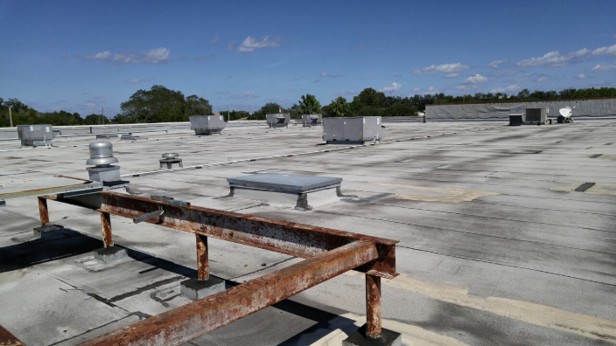
Understanding what inspectors look for is the first step toward avoiding costly surprises.
1. Improper Drainage and Ponding Water
Flat roofs are designed to move water—not hold it.
Inspectors look for:
- Standing water that remains 48+ hours after rainfall
- Blocked or poorly designed drains and scuppers
- Areas of inadequate slope
Why it matters:
Ponding water accelerates membrane deterioration, increases structural load, and is one of the leading causes of premature roof failure.
2. Failing Seams and Flashing
Seams and flashing are some of the most vulnerable parts of a commercial flat roof.
Inspectors check for:
- Open or separating seams
- Cracked or deteriorated sealant
- Loose flashing around penetrations (vents, curbs, HVAC units)
Why it matters:
These are common entry points for water—and often the source of leaks that spread beneath the membrane.
3. Non-Compliant Edge Metal (ES-1 Standards)
Edge metal isn’t just cosmetic—it’s critical for wind resistance.
Inspectors evaluate:
- Proper installation of coping and edge systems
- Compliance with ES-1 wind uplift standards
- Secure fastening and fabrication quality
Why it matters:
Industry data shows that a large percentage of roof failures begin at the edges. Non-compliant edge details can result in inspection failure and increased wind damage risk.
4. Signs of Moisture Beneath the Roof System
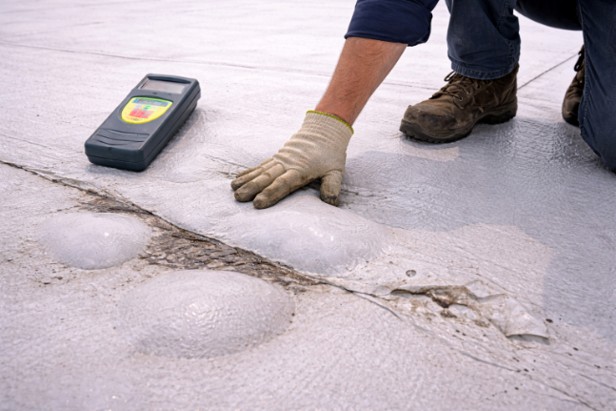
Even if the surface looks fine, inspectors may identify signs of hidden moisture.
Indicators include:
- Soft spots underfoot
- Bubbling or blistering membranes
- Interior staining or odors
Why it matters:
Moisture trapped in insulation reduces energy efficiency and can lead to structural deterioration if not addressed.
5. Poor Roof Access and Safety Concerns
Inspectors don’t just evaluate the roof—they evaluate how it’s accessed and maintained.
They look for:
- Safe access points (ladders, hatches)
- Fall protection where required
- Clear walk paths around equipment
- Trip hazards or clutter
Why it matters:
Unsafe conditions can result in OSHA concerns, liability risks, and failed inspections.
6. Unauthorized Repairs or Non-Certified Work
One of the most overlooked issues is who performed the work on the roof.
Inspectors may flag:
- Improper patching methods
- Incompatible materials
- Work not performed to manufacturer specifications
Why it matters:
These issues can void warranties, fail inspections, and lead to larger system failures.
What Happens If You Fail a Roof Inspection
Failing a commercial roof inspection can have immediate and long-term consequences.
Short-Term Impact:
- Required corrective repairs
- Re-inspection fees
- Project delays (especially during sales or refinancing)
Long-Term Impact:
- Increased repair costs due to delayed action
- Reduced property value
- Insurance complications
- Ongoing maintenance issues
In some cases, minor issues identified early could have been resolved quickly—but once flagged in an inspection, they become urgent compliance requirements.
How Etheridge Roofing Helps You Stay Inspection-Ready
At Etheridge Roofing, we don’t just fix problems—we help prevent them.
Our approach is built around proactive inspection, documentation, and compliance.
✔️ Pre-Inspection Evaluations
We assess your roof before an official inspection, identifying and addressing issues early.
✔️ Code-Compliant Repairs and Installation
From drainage to edge metal, we ensure all work meets current standards and manufacturer specifications.
✔️ ES-1 Certified Metal Fabrication
Our in-house metal shop allows us to fabricate edge systems that meet strict wind uplift requirements.
✔️ Detailed Documentation
We provide reports, photos, and records that support compliance and help during inspections or transactions.
✔️ Ongoing Maintenance Plans
Routine service keeps your roof in optimal condition and reduces the risk of inspection failure.
The Best Strategy: Don’t Prepare Last-Minute
The most successful inspections don’t happen because everything was fixed at the last minute.
They happen because the roof has been consistently maintained and professionally monitored over time.
Waiting until an inspection is scheduled often means:
- Limited time to make repairs
- Higher costs
- Increased stress
Planning ahead allows you to stay in control.
Final Thought: Inspections Should Confirm, Not Surprise

A roof inspection should validate the condition of your building—not reveal problems for the first time.
With the right approach, inspections become routine—not risky.
At Etheridge Roofing, we help ensure your roof is always ready—so when inspectors arrive, there are no surprises.
Schedule a Roof Assessment Before Your Next Inspection
If you have an upcoming inspection—or simply want peace of mind—schedule a professional evaluation with Etheridge Roofing. We’ll help you identify issues early, stay compliant, and protect your investment.
Popular Posts

Selecting the appropriate roofing system is...


The connection between the quality of our...
Recent Posts

When faced with Emergency Commercial Roof...

As hurricane season approaches, property managers...