

Roof Age Matters—but It Does Not Tell the Whole Story
Two commercial buildings can have roofs installed in the same year.
They can use similar roofing materials. They can sit in the same general climate. They may even look nearly identical from the ground.
Yet ten or fifteen years later, one roof may still be performing reliably while the other is dealing with recurring leaks, saturated insulation, seam problems, and conversations about replacement.
Why?
Because the lifespan of a commercial flat roof is influenced by far more than its installation date.
Maintenance history, installation quality, drainage, weather exposure, and even the number of people walking across the roof can all affect how a roofing system performs over time.
At Etheridge Roofing, we believe roof age is an important piece of the story—but it should never be the only factor used to evaluate roof condition.
Here are some of the biggest reasons one commercial roof may outlast another.
1. Maintenance Changes How a Roof Ages
A commercial roof does not suddenly become old overnight.
Roof deterioration usually develops gradually.
Sealants age. Debris collects. Drainage paths become restricted. Small punctures occur. Flashing details experience movement. Minor problems begin to develop around penetrations and seams.
The difference is often how quickly those issues are identified and addressed.
A roof that receives routine professional inspections gives property owners an opportunity to catch developing concerns while they are still manageable.
A roof that is largely ignored until water enters the building may allow the same small issue to spread beneath the roofing system for months—or longer.
Small Problems Rarely Stay the Same Size
Consider a small membrane puncture.
If identified early, the affected area may be relatively limited.
If left unnoticed, moisture may migrate into the roofing assembly and affect insulation beyond the original entry point.
The roof did not necessarily fail because it was “too old.”
The problem was simply allowed more time to develop.
That is why preventive roof maintenance is one of the most important factors in long-term commercial roof performance.
2. Installation Quality Matters From Day One
A roof's long-term performance begins before the building owner ever schedules the first maintenance inspection.
It begins with installation.
Commercial flat roofing systems are assemblies. The membrane, insulation, fasteners, flashing, edge systems, penetrations, and drainage design must work together.
Small installation details can create major performance differences over time.
These may include:
- seam quality,
- membrane attachment,
- flashing details,
- insulation installation,
- penetration work,
- edge metal,
- and drainage execution.
A roof may look clean and finished immediately after installation while still containing details that affect its long-term performance.
The Details Usually Tell the Story
Commercial roof failures do not always begin in the middle of a large, open membrane area.
Problems frequently develop around the more complicated parts of the roof: penetrations, transitions, curbs, drains, seams, and perimeter details.
These areas require careful workmanship and a clear understanding of the roofing system being installed.
This is one reason choosing an experienced commercial roofing contractor matters.
The quality of the installation can influence the roof long after the crew leaves the jobsite.
3. Drainage Can Change a Roof's Entire Future
Flat roofs are not designed to simply hold water.
Low-slope commercial roofing systems rely on proper slope and drainage components to move water away from the roof surface.
When drains or scuppers become blocked, drainage paths are compromised, or the roofing assembly does not provide effective drainage, water may remain on the roof longer than intended.
Over time, drainage problems can contribute to:
- prolonged moisture exposure,
- additional stress on roofing components,
- debris accumulation,
- and deterioration around vulnerable areas.
4. Ponding Water Is a Warning Sign Worth Investigating
Seeing standing water on a commercial roof does not automatically tell you the entire roof has failed.
But recurring ponding should not simply be accepted as normal.
The cause matters.
Is debris blocking a drain?
Has insulation compressed?
Is there an issue with slope?
Has the building or roof assembly experienced movement?
A professional evaluation can help determine why water is remaining on the roof and whether corrective action is needed.
Two roofs of the same age can perform very differently simply because one consistently moves water as intended while the other has spent years dealing with unresolved drainage problems.
4. Weather Exposure Is Not Equal From Building to Building
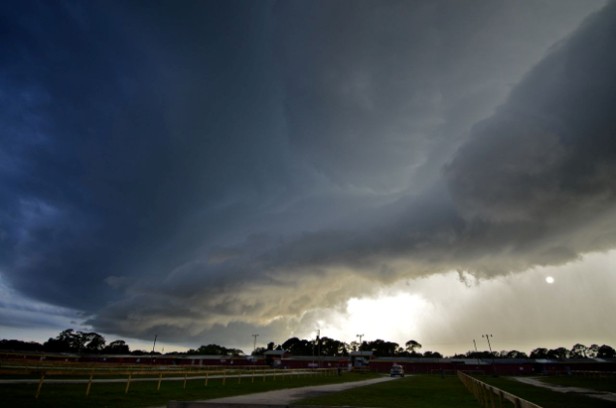
Even buildings located in the same region can experience different roofing conditions.
One building may be more exposed to:
- direct sunlight,
- high winds,
- heavy rainfall,
- airborne debris,
- or temperature fluctuations.
Another may be partially protected by nearby buildings or experience different rooftop conditions because of its height, orientation, or surrounding environment.
In coastal and Mid-Atlantic markets, commercial roofs may also experience repeated wind, moisture, heat, and seasonal temperature changes.
These conditions place stress on roofing materials over time.
Weather Does Not Affect Every Part of the Roof Equally
The roof perimeter may experience different wind pressures than the field of the roof.
Areas near drains may remain wet longer.
Sections exposed to constant sunlight may experience different surface temperatures than shaded areas.
That means a roof does not always age evenly.
A professional roof inspection should evaluate the condition of the entire system—not assume that one healthy-looking area represents the condition of every section of the roof.
5. Rooftop Traffic Can Quietly Shorten Roof Life
One of the most overlooked factors in commercial roofing is foot traffic.
Commercial roofs frequently contain equipment that requires routine service.
HVAC technicians, electricians, maintenance teams, and other contractors may need roof access throughout the year.
Every trip across the roof creates an opportunity for accidental damage.
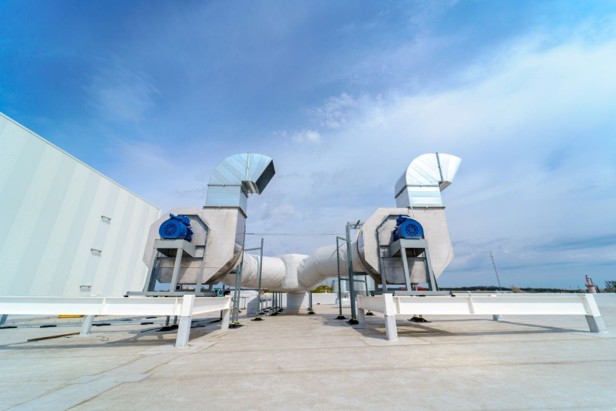
Dropped tools, sharp equipment, repeated walking paths, and work performed near rooftop units can contribute to membrane punctures or surface wear.
Your Roofing Contractor May Not Be the Only Person on Your Roof
This is an important distinction for property managers.
A roofing system may be professionally installed and carefully maintained, but damage can still occur after another trade completes work on the roof.
That is why walk pads, designated traffic paths, and post-work roof evaluations can be valuable on commercial properties with frequent rooftop activity.
If HVAC or mechanical work has recently been completed, it may also be worth documenting the roof condition around the work area.
The goal is not to assign blame.
It is to identify damage before a small puncture becomes a hidden moisture problem.
6. Moisture Changes the Way a Roof Performs
Water beneath a roofing membrane can create problems that are not immediately visible from the surface.
Moisture may affect insulation performance and contribute to deterioration within the roofing assembly.
And because water can move beneath some roof systems, the location of an interior leak does not always identify the exact point where moisture entered.
This is why two roofs that look similar from above may have very different conditions beneath the membrane.
One may have dry, functional insulation.
The other may contain areas of trapped moisture that have been developing over time.
What You Cannot See Still Matters
Depending on the roof and the suspected conditions, professional evaluation may include additional moisture investigation or infrared scanning.
The purpose is to gather better information about the roofing system before major decisions are made.
A roof should not be evaluated on appearance alone.
Understanding what is happening within the assembly can help property owners make more informed repair, recovery, or replacement decisions.
7. The Way Repairs Are Handled Matters Too
Not every roof repair contributes equally to long-term roof performance.
Repeated temporary patches may stop visible water for a short period without addressing the underlying cause of the problem.
Over time, a roof can accumulate multiple repairs with:
- incompatible materials,
- aging sealants,
- undocumented work,
- or unresolved moisture beneath the system.
A strategic repair approach looks beyond the immediate leak.
Why did the problem develop?
Has moisture spread?
Is the same area failing repeatedly?
Is the repair compatible with the existing roofing system and warranty requirements?
The goal should not simply be to make the leak disappear today.
It should be to understand what the roof needs next.
Roof Age Is a Number. Roof Condition Is a Story.
When property owners ask, “How old is the roof?” they are asking an important question.
But there are several other questions worth asking:
- How has the roof been maintained?
- Who installed the system?
- Has drainage been monitored?
- Has the roof experienced major weather events?
- How much rooftop traffic does the building receive?
- Are repairs documented?
- Is there evidence of moisture beneath the system?
Those answers often provide a much clearer picture of the roof's future than age alone.
A ten-year-old roof with a strong maintenance history may present a very different planning scenario than a ten-year-old roof with recurring leaks and no service documentation.
Same age.
Completely different story.
Final Thought: Long Roof Life Is Rarely an Accident
Some commercial roofs last longer because the system was installed correctly from the beginning.
Others benefit from consistent maintenance, effective drainage, limited damage, and early repairs.
Usually, long-term roof performance is the result of several factors working together.
Your roof's installation date may be fixed.
But how the roofing system is inspected, maintained, documented, and protected moving forward can still influence its future.
Popular Posts

Selecting the appropriate roofing system is...


The connection between the quality of our...
Recent Posts

When faced with Emergency Commercial Roof...

As hurricane season approaches, property managers...