

Why the Lowest Bid Doesn’t Always Mean the Lowest Cost
You receive three proposals for your commercial roof.
One is significantly less expensive than the others. Another includes pages of specifications and warranty information. The third recommends a slightly different roofing system altogether.
At first glance, comparing the totals seems like the easiest way to make a decision.
But are you actually comparing the same project?
Commercial roofing proposals can differ substantially in scope, materials, insulation, tear-off requirements, edge details, warranties, exclusions, and even what happens if hidden conditions are discovered after work begins.
That means comparing commercial roofing proposals properly requires looking beyond the number at the bottom of the page. At Etheridge Roofing, we believe property owners should understand exactly what they are purchasing before choosing a contractor.
Here are the questions worth asking when comparing bids for a commercial flat roofing project.
First: Make Sure You’re Comparing the Same Scope of Work
Before comparing price, compare scope.
Two contractors can evaluate the same building and propose very different approaches.
One proposal might include a complete tear-off and replacement.
Another might propose recovering the existing roofing system.
A third may include only targeted repairs.
Those aren’t three different prices for the same project.
They’re three different projects.
Before comparing totals, identify exactly what each contractor is proposing.
Look for details such as:
- repair, recovery, or full replacement,
- areas of the roof included,
- existing materials being removed,
- materials remaining in place,
- insulation being replaced or added,
- drainage work,
- edge metal,
- penetrations and flashing,
- and interior or exterior protection requirements.
If the scopes aren’t comparable, the prices won’t be either.
1. Look at the Roofing System Being Proposed
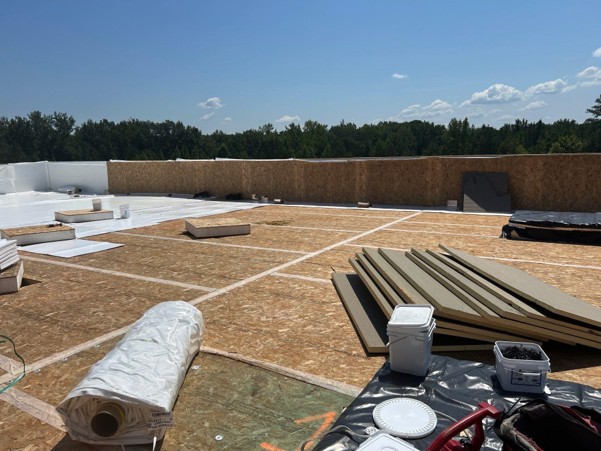
“New commercial roof” isn’t specific enough.
The proposal should identify the roofing system being installed and provide enough information for the owner to understand what is included.
For single-ply systems, that may include information such as:
- membrane type,
- membrane thickness,
- attachment method,
- insulation assembly,
- cover board when applicable,
- and manufacturer.
Etheridge Roofing works with commercial roofing systems including TPO, PVC, and other solutions appropriate for the building and project conditions.
The important question isn’t simply: Which material is cheaper?
It’s: Why is this roofing system being recommended for this particular building?
The right solution depends on factors including the existing roof, building use, rooftop conditions, drainage, performance goals, and warranty requirements.
2. Compare the Insulation—not Just the Membrane
The membrane is the part of the roof everyone sees.
But the roofing assembly underneath it matters enormously.
Insulation affects:
- thermal performance,
- energy efficiency,
- roof slope,
- drainage,
- and the overall roof assembly.
When comparing proposals, determine whether each contractor is including the same insulation scope.
Questions to ask include:
- Is existing insulation remaining?
- Is damaged or wet insulation being removed?
- Is new insulation included?
- What type and thickness are being proposed?
- Is tapered insulation included where required?
- Is a cover board included?
One proposal may appear less expensive because it includes significantly less work beneath the membrane.
Without comparing these details, an owner may believe they’re evaluating two equivalent roofing systems when they aren’t.
3. Understand What Happens to the Existing Roof
This is one of the most important differences between commercial roofing proposals.
Ask whether the contractor is proposing:
A roof recovery
A new roofing system is installed over quapfying portions of the existing assembly.
A full tear-off
Existing roofing materials are removed to the appropriate substrate before the new assembly is installed.
Neither option is automatically right for every building.
The existing roof’s condition, moisture levels, code requirements, roof assembly, and other project-specific factors must be evaluated.
A recovery may have a lower initial cost because less material is removed.
But if the existing assembly contains widespread moisture or unsuitable conditions, covering those problems does not make them disappear.
The proposal should make clear what is happening to the existing roof and why.
4. Compare How Each Proposal Handles Wet or Damaged Materials
Hidden conditions are one of the biggest variables in reroofing projects.
Moisture may exist beneath a membrane even when the full extent cannot be seen from the surface.
Before construction, inspections, moisture surveys, or core samples may help identify existing conditions.
But some conditions are not fully discovered until removal begins.
That raises an important proposal question:
What happens if additional wet insulation or damaged decking is found?
Review whether the proposal explains:
- what removal is already included,
- how additional replacement will be priced,
- whether unit prices are provided,
- and how the owner will be notified before additional work proceeds.
This is where a lower bid can become more expensive later if the proposal leaves significant conditions undefined.
5. Look Closely at Drainage
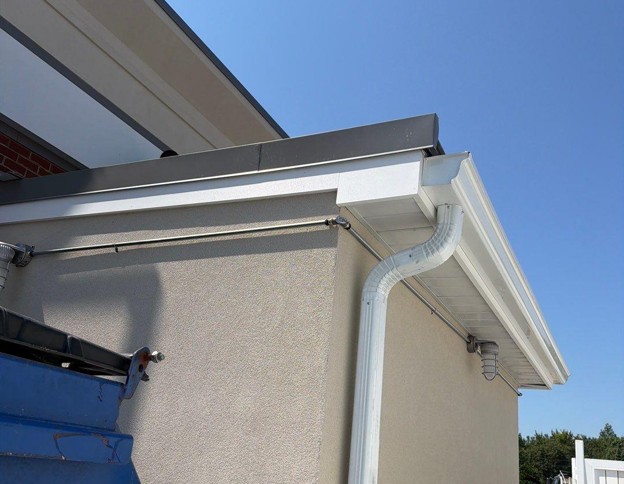
Water management is fundamental to low-slope roofing performance.
When comparing proposals, look for how each contractor addresses:
- existing drains,
- scuppers,
- overflow drainage,
- tapered insulation,
- ponding areas,
- and drainage modifications.
If your existing roof has persistent ponding, installing a new membrane without addressing the underlying drainage condition may leave the original problem unresolved.
The lowest-cost proposal may not necessarily include the drainage improvements included in another contractor’s scope.
Again, the important question is not:
“Which number is lower?”
It’s:
“What am I receiving for that number?”
6. Don’t Overlook Edge Metal
The perimeter of a commercial roof deserves close attention.
Roof edges experience significant wind pressures, which is why edge systems are addressed by building codes and industry testing standards.
Compare whether proposals include:
- coping,
- fascia,
- perimeter edge metal,
- attachment methods,
- and applicable tested edge systems.
This is an area where Etheridge Roofing has a significant in-house capability.
Our full metal fabrication shop is ES-1 certified, allowing our team to fabricate qualifying edge metal systems to applicable specifications rather than relying entirely on outsourced fabrication.
That gives us greater control over fabrication, coordination, and scheduling for applicable project components.
Edge metal may represent a relatively small portion of the overall roof area.
But it should never be treated as an afterthought.
7. Compare the Warranty Carefully

Two proposals may both advertise a “20-year warranty” while offering very different protection.
Commercial roofing warranties vary by manufacturer, system, project, and coverage.
When reviewing proposals, ask:
- Who provides the warranty?
- Is it a manufacturer warranty, contractor workmanship warranty, or both?
- What components are covered?
- How long does coverage last?
- Are inspections required?
- Are there owner maintenance responsibilities?
- Are there exclusions?
- Is the warranty transferable?
Don’t compare warranties based only on the number of years printed on the proposal.
Read what the warranty actually covers.
And whenever possible, request the warranty terms before making the final decision.
8. Review What’s Excluded
The exclusions section may be one of the most important parts of the entire proposal.
Look carefully for work that is not included.
Depending on the project, exclusions may involve:
- structural repairs,
- electrical work,
- HVAC modifications,
- plumbing,
- hazardous material remediation,
- unforeseen deck replacement,
- interior protection,
- permits,
- or work by other trades.
An exclusion isn’t necessarily a red flag.
Some work legitimately belongs to another contractor or requires conditions that cannot be known before construction.
The concern is whether the owner clearly understands those exclusions before signing.
A transparent proposal should make the project’s boundaries clear.
9. Ask About Permits, Inspections, and Code Requirements
Depending on the project’s location and scope, permits and inspections may be required.
Before selecting a contractor, determine:
- who is responsible for obtaining permits,
- whether permit costs are included,
- whether inspections are anticipated,
- and how applicable code requirements are addressed in the proposed roofing assembly.
Commercial roofing requirements can vary by jurisdiction and project.
The proposal should make responsibilities clear rather than leaving the owner to discover them after construction begins.
10. Evaluate the Project Schedule—Not Just the Start Date
A contractor saying, “We can start next week,” sounds attractive.
But start date is only one part of scheduling.
Ask about:
- anticipated project duration,
- material availability,
- staging,
- building access,
- weather contingencies,
- coordination with other trades,
- and communication if the schedule changes.
A realistic schedule is more valuable than an aggressive date that cannot be supported.
Commercial roofing projects can be affected by weather, material lead times, hidden moisture, structural conditions, permits, and trade coordination.
A reliable contractor should acknowledge those variables instead of pretending they don’t exist.
11. Compare Safety and Building Protection
Roofing work occurs above people, property, equipment, and daily business operations.
Ask contractors how they plan to protect:
- employees,
- tenants,
- customers,
- entrances,
- vehicles,
- landscaping,
- inventory,
- and interior spaces.
Also evaluate the contractor’s approach to jobsite safety.
Commercial roofing involves fall hazards and other construction risks governed by OSHA requirements.
Safety should be part of project planning—not something added after work begins.
12. Look at the Contractor Behind the Proposal
The proposal matters.
So does the company responsible for delivering it.
Before selecting a commercial roofing contractor, evaluate:
- commercial roofing experience,
- manufacturer relationships or certifications relevant to the proposed system,
- safety practices,
- communication,
- documentation,
- references,
- warranty support,
- and ability to service the roof after installation. A roof is a long-term asset.
Ideally, the contractor relationship should extend beyond installation day.
If a problem occurs several years later, you want to know who to call—and whether they understand the history of your roof.
A Better Way to Compare Commercial Roofing Proposals.
Instead of placing proposals side-by-side and looking only at price, create a comparison based on the actual project.
| Compare | Proposal A | Proposal B | Proposal C |
|---|---|---|---|
| Roofing system | |||
| Membrane specification | |||
| Insulation assembly | |||
| Tear-off or recovery | |||
| Wet insulation allowance | |||
| Deck repair pricing | |||
| Drainage improvements | |||
| Edge metal | |||
| Warranty | |||
| Permits | |||
| Project duration | |||
| Major exclusions | |||
| Ongoing service/support | |||
| Total price |
Once everything is organized this way, the differences become much easier to see.
Sometimes the least expensive proposal will still be the best choice.
Sometimes it won’t.
The goal isn’t to avoid the lowest bid.
It’s to understand why it is lower before choosing it.
Red Flags Worth Asking About
A commercial roofing proposal deserves additional questions if it:
- provides very little detail about the roofing system,
- doesn’t clearly define the scope,
- leaves insulation specifications unclear,
- doesn’t address existing moisture,
- provides no explanation of warranty coverage,
- has vague exclusions,
- or is dramatically cheaper than every competing proposal without an obvious reason.
A price difference isn’t automatically a warning sign.
But a significant difference should be explainable.
How Etheridge Roofing Approaches Commercial Roofing Proposals
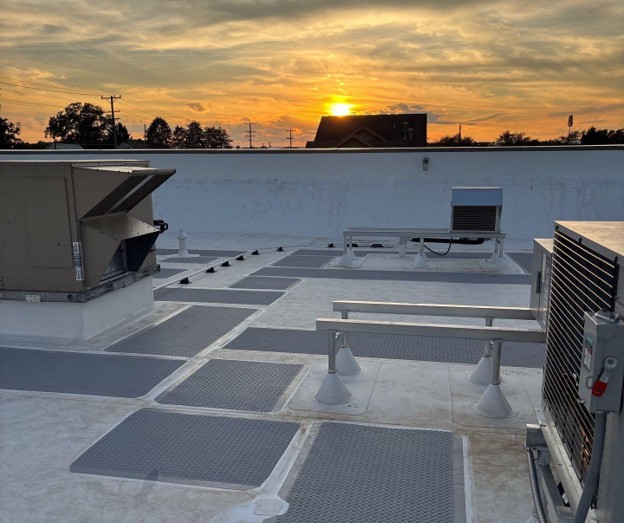
At Etheridge Roofing, we believe property owners should understand what they’re investing in.
A commercial roofing proposal shouldn’t require the customer to guess what’s included.
Our goal is to evaluate the building, recommend an appropriate commercial roofing solution, clearly define the proposed scope, and help owners understand the factors that affect their project.
Because a roofing proposal isn’t simply a price.
It’s a plan for protecting one of the most important systems on your commercial property.
Final Thought: Compare Value, Not Just Price
Choosing a commercial roofing contractor isn’t about finding the most expensive proposal.
And it isn’t automatically about finding the cheapest.
It’s about understanding what each contractor is actually offering. Compare:
- Scope.
- System.
- Insulation.
- Drainage.
- Edge details.
- Warranty.
- Exclusions.
- Schedule.
- Safety.
- Support.
Then compare price.
When you evaluate proposals in that order, you’re far more likely to make a decision based on long-term value instead of a number that only tells part of the story.
Comparing Commercial Roofing Proposals?
If you’re planning a commercial roofing project, Etheridge Roofing can help you understand your roof’s current condition and the options available for your building.
Contact our team to discuss your commercial roofing needs and request a proposal.
Popular Posts

Selecting the appropriate roofing system is...


The connection between the quality of our...
Recent Posts

When faced with Emergency Commercial Roof...

As hurricane season approaches, property managers...