


When a commercial roofing project is scheduled, everyone wants the same thing: a safe, high-quality roof completed on time and with as little disruption as possible.
But commercial roofing does not happen in a controlled environment.
Crews are working outdoors, often on occupied buildings, while coordinating materials, equipment, other trades, inspections, existing building conditions, and weather. Even a carefully planned project can encounter circumstances that change the schedule.
Understanding the biggest causes of commercial roofing project delays can help property owners, facility managers, and general contractors prepare more effectively—and recognize the difference between an avoidable delay and a responsible adjustment to the project plan.
At Etheridge Roofing, planning is an important part of every commercial roofing project. The goal isn’t simply to move quickly. It’s to anticipate potential obstacles, communicate when conditions change, and keep the project moving without sacrificing safety or installation quality.
Here are six of the most common factors that can affect a commercial roofing schedule.
1. Weather Can Stop Roofing Work—and Sometimes It Should
Weather is one of the most obvious causes of roofing delays, but its impact extends beyond whether it is actively raining. Commercial roofing work can be affected by:
- rain,
- high winds,
- severe storms,
- wet roof surfaces,
- extreme heat,
- and temperatures outside a roofing product’s required installation conditions.
Safety comes first.
OSHA requires employers to address hazards created by adverse weather conditions. When high winds, rain, snow, sleet, or other conditions make roofing work unsafe, operations may need to stop until safe working conditions return.
There is another consideration: installation quality.
Roofing membranes, adhesives, primers, sealants, and other components have manufacturer-specific application requirements. Weather conditions can affect how certain products are stored, applied, adhered, or welded.
Continuing simply to stay on schedule is not worth compromising worker safety or the roofing system.
A Weather Delay Can Actually Be Good Project Management
When a contractor pauses work because conditions are unsafe or incompatible with proper installation, that isn’t necessarily poor scheduling.
Sometimes it is exactly the opposite.
A responsible commercial roofing contractor should monitor conditions, protect exposed areas appropriately, communicate schedule changes, and resume work when conditions allow the roofing system to be installed correctly.
2. Material Availability and Lead Times Can Affect the Schedule

Commercial roofs require more than rolls of membrane.
Depending on the project, materials may include:
- membrane,
- insulation,
- cover boards,
- fasteners,
- adhesives,
- flashing components,
- drains,
- specialty accessories,
- and fabricated edge metal.
Some components may be readily available.
Others may require manufacturing, fabrication, ordering, or delivery specifically for the project.
That makes procurement an important part of roofing project planning.
Why Early Planning Matters
Ordering materials too late can create unnecessary delays before installation even begins.
A professional contractor should evaluate material requirements during preconstruction and coordinate procurement around the anticipated project schedule.
However, circumstances outside the contractor’s control—including manufacturing delays, transportation issues, product availability, or changes to the project scope—can still affect delivery.
This is one reason commercial roofing planning should begin well before the desired installation date whenever possible.
3. Poor Coordination Between Trades Can Bring a Roof Project to a Halt
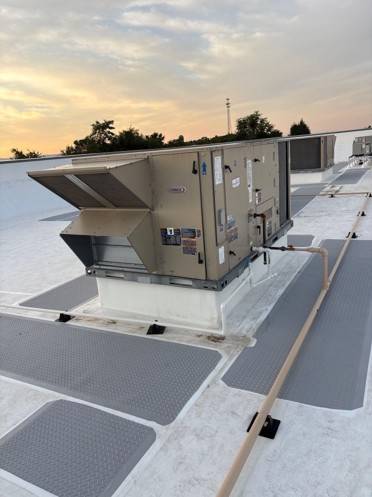
Commercial roofs are shared spaces.
The roofing contractor may need to coordinate with:
- HVAC contractors,
- electricians,
- plumbers,
- m echanical contractors,
- structural teams,
- solar installers,
- and other construction trades.
Problems occur when that coordination happens too late.
Imagine a new roofing membrane has already been installed and another contractor needs to add a penetration for mechanical equipment.
Or rooftop equipment arrives later than expected and the roofing crew cannot complete flashing around the curb.
Now the roofing schedule may need to change.
Sequencing Matters
Commercial construction often works like a chain.
One trade’s delay can affect the next.
Good preconstruction coordination helps answer questions such as:
- Which rooftop equipment is being replaced?
- Are new penetrations required?
- When will curbs be installed?
- Does electrical or mechanical work need to happen first?
- Which areas of the roof must remain accessible?
- When can final flashing be completed?
Answering those questions before crews arrive can prevent unnecessary downtime and rework.
4. Hidden Moisture Can Change the Scope of Work
Some of the most important roof conditions cannot be seen from the surface.
A membrane may appear relatively normal while moisture has migrated into the insulation beneath it.
That creates a major challenge during reroofing.
Once work begins—or additional testing is performed—the contractor may discover more saturated material than originally anticipated.
That can affect:
- the amount of insulation requiring removal,
- material quantities,
- labor,
- disposal,
- and the project schedule.
Why Moisture Detection Before Construction Matters
Pre-project roof evaluations can help reduce uncertainty.
Depending on the existing roofing system and project conditions, moisture investigation may include:
- visual inspection,
- infrared scanning,
- moisture testing,
- or roof core samples.
No evaluation can eliminate every possible surprise hidden within an existing building, but better information allows contractors and owners to plan more accurately.
Finding unexpected moisture during construction should not simply be covered back up to maintain the original schedule.
The underlying condition needs to be evaluated and addressed appropriately.
5. Structural Surprises Can Require Additional Work
Sometimes removing an existing roofing assembly reveals conditions that could not be fully evaluated beforehand. Examples can include:
- deteriorated decking,
- corrosion,
- damaged substrate,
- unexpected previous repairs,
- or conditions that differ from available plans and records.
When these issues appear, the roofing contractor may not be able to simply continue installing the new system.
The affected area may require evaluation, additional materials, or coordination with another qualified professional or trade before roofing work proceeds.
Why This Can Affect More Than One Day of Work
A structural discovery can trigger several additional steps.
The project team may need to:
- document the condition,
- determine its extent,
- identify the appropriate corrective action,
- obtain additional materials,
- coordinate necessary repairs,
- and adjust the roofing sequence.
That can change the schedule.
But covering an unsuitable substrate simply to preserve a completion date can create a much larger problem later.
6. Permits and Required Inspections Can Affect Project Timing

Depending on the jurisdiction and scope of work, commercial roofing projects may require permits, plan review, inspections, or other approvals.
Those requirements are controlled by the applicable local authority—not solely by the roofing contractor.
A project may experience delays when:
- permit applications require additional information,
- plans need revision,
- inspection availability is limited,
- the project scope changes,
- or additional code-related requirements are identified.
Requirements can also vary significantly from one jurisdiction to another.
That makes early permit planning particularly important for larger commercial roofing projects.
Code Compliance Isn’t a Step Worth Rushing
Permit and inspection requirements exist to ensure applicable construction work complies with adopted codes and local requirements.
A reliable commercial roofing contractor should understand the project’s permitting responsibilities and account for those requirements as early as possible.
Sometimes the Building Itself Creates Scheduling Challenges
There is another factor that deserves attention: the building must often remain operational while roofing work occurs.
A commercial roofing project may take place above:
- offices,
- retail stores,
- healthcare facilities,
- schools,
- manufacturing operations,
- warehouses,
- restaurants,
- or other occupied spaces.
That can affect when certain work is performed.
For example, project teams may need to coordinate:
- delivery times,
- crane operations,
- parking lot access,
- entrances,
- noise-sensitive work,
- material staging,
- rooftop HVAC access,
- or areas directly above sensitive operations.
The fastest possible installation schedule is not always the best schedule for the building.
Sometimes careful phasing allows the business below to continue operating while the roof above is completed safely.
How Better Planning Helps Reduce Commercial Roofing Delays
Not every delay can be prevented.
Weather cannot be controlled.
Existing buildings can contain hidden conditions.
Manufacturing and inspection schedules can change.
But strong preconstruction planning can reduce unnecessary surprises.
Before a major commercial roofing project begins, the project team should understand:
- existing roof conditions,
- anticipated moisture concerns,
- material requirements,
- project sequencing,
- rooftop equipment changes,
- access and staging needs,
- permit requirements,
- building operations,
- and communication responsibilities.
The earlier these issues are discussed, the easier they are to manage.
Communication Matters When the Schedule Changes
A reliable contractor should never promise that nothing unexpected will happen.
That’s unrealistic in construction.
What matters is what happens next.
When a delay develops, property owners and project teams should understand:
- what happened,
- why it affects the schedule,
- what needs to happen before work continues,
- and how the contractor plans to move forward.
Clear communication turns an unexpected condition into a manageable project decision.
Poor communication turns the same condition into frustration.
That’s why communication is not simply customer service during commercial roofing.
It’s part of project management.
How Etheridge Roofing Helps Keep Commercial Projects Moving
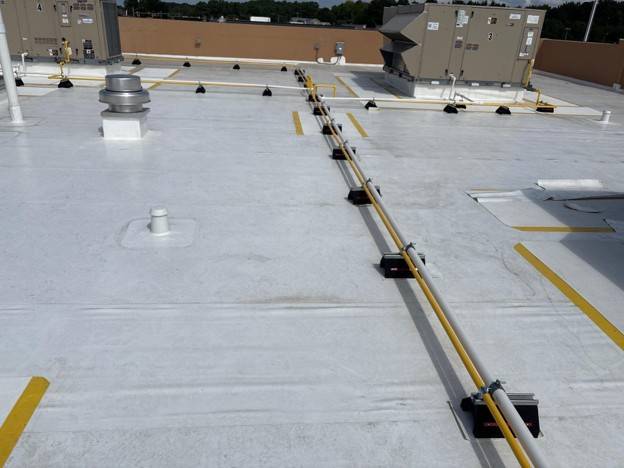
At Etheridge Roofing, commercial roofing projects begin with planning.
Our team evaluates project conditions, coordinates materials and scheduling, communicates with project stakeholders, and works to identify potential complications before crews begin installation.
Our in-house metal fabrication capabilities also give us greater control over certain fabricated components required for our projects, reducing reliance on outside fabrication for those items and helping us respond more efficiently when project needs change.
But keeping a project moving never means sacrificing safety or installation quality simply to preserve a date on the calendar.
The objective is a well-planned project, clear communication, and a commercial roofing system installed correctly.
Final Thought: A Good Schedule Includes a Plan for the Unexpected
The best commercial roofing schedules aren’t built on the assumption that nothing will go wrong.
They’re built around preparation.
Weather may change.
Existing conditions may be different than expected.
Another trade may need additional time.
A permit or inspection may take longer than anticipated.
The difference between a manageable delay and a project problem often comes down to planning, coordination, and communication.
When property owners and contractors understand the potential challenges before work begins, everyone is better prepared to keep the project moving forward.
Planning a Commercial Roofing Project?
If you’re preparing for a commercial roof replacement, recovery, or major roofing project, Etheridge Roofing can help evaluate the property, identify potential project considerations, and develop a plan around your building’s needs.
Visit Etheridge Roofing online or contact our team to discuss your upcoming commercial roofing project.
Popular Posts

Selecting the appropriate roofing system is...


The connection between the quality of our...
Recent Posts

When faced with Emergency Commercial Roof...

As hurricane season approaches, property managers...